
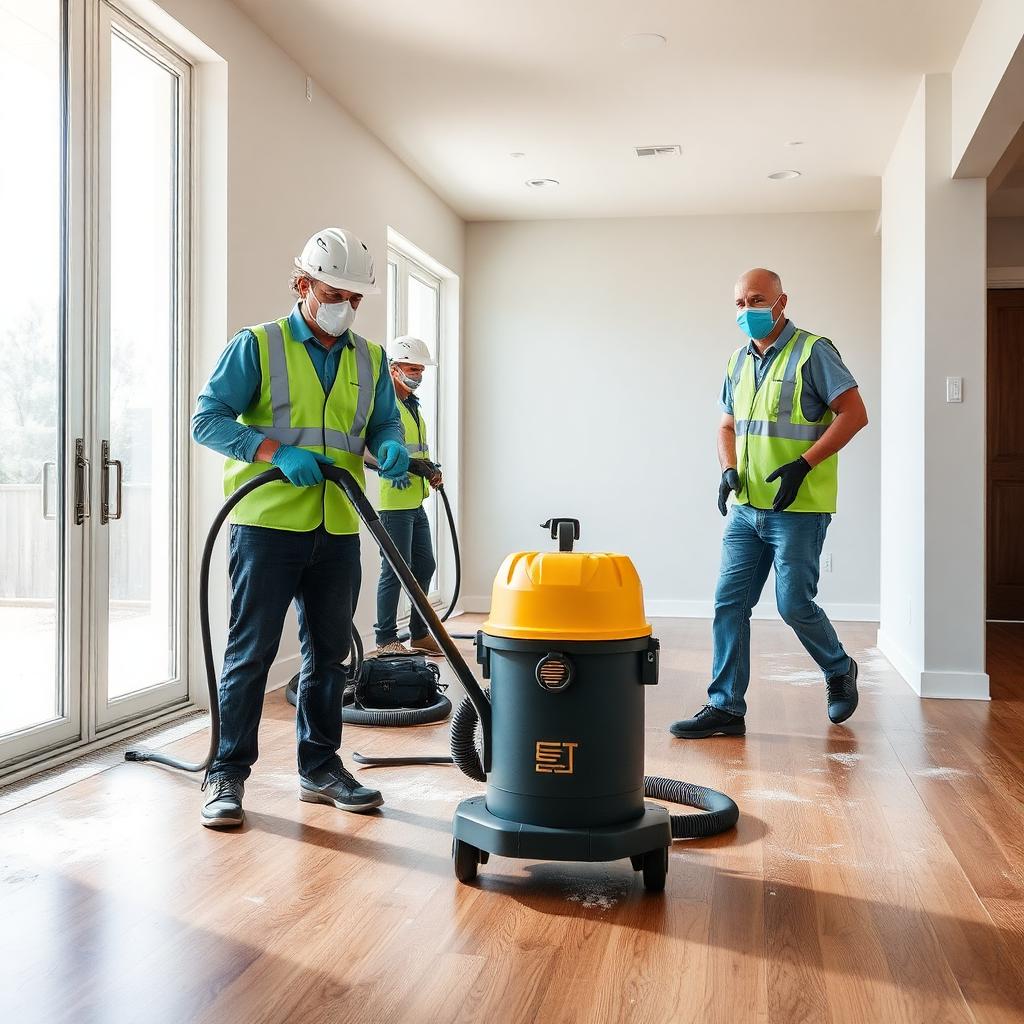
A resale home carries the last household's dirt. A new build carries something different and in some ways more annoying: the residue of its own construction, most of it finer than household dust and still in the process of landing.
The builder's final clean is real work and it is not a scam. It is simply scoped to produce a house that photographs well and walks through well. That is a different objective from a house you are about to put your clothes, your plates and your children into.
Change the HVAC filter first, remove fine dust dry before anything wet, do the places the final clean was never scoped to reach, then expect a second pass 24–48 hours later. And do not buy duct cleaning on a brochure — look inside first.
What a Builder's Final Clean Is Contracted to Do
Broadly: floors, visible surfaces, window stickers, labels off the appliances, debris out. It is aimed at the walkthrough, and for that purpose it works — most people sign off on a new build genuinely impressed by how it looks.
What it is not scoped to include is the inside of cabinets and drawers, the tops of cabinets, window and slider tracks, appliance interiors, closet shelving, register grilles and the top edges of doors and trim. None of that is visible at a walkthrough. All of it is in daily contact with you from the week you move in.
Worth knowing before you ask: this is almost never worth arguing with the builder about. The scope is what was agreed, the crew did it, and the hour you would spend on the phone is longer than the hour it takes to fix.
The Dust Settles Where You Will Not Look
Four places account for most of what gets missed, and they share a trait: they are all out of the walkthrough's sightline.
If you want a thirty-second test of whether a new house was cleaned or presented, run a finger along a slider track and look at the top of a kitchen cabinet. Those two answer the question.
Nobody Needs to Sell You Duct Cleaning
Search this subject and you will be told, repeatedly and confidently, that a new house needs its air ducts cleaned. Nearly every page saying so sells duct cleaning.
The honest version is more boring. Construction debris genuinely does get into ductwork during a build — vents sit open for months while people saw and sand around them. But the EPA's long-standing position is that routine duct cleaning has not been shown to prevent health problems and is not necessary as a matter of course. It is justified by what is actually in the system: visible debris, mould growth, vermin. Not by the house being new.
So do the cheap thing first. Take the covers off two or three registers and the main return and look. Change the filter — it costs almost nothing and catches most of what is circulating. If what you see behind the grilles bothers you, have an HVAC technician inspect and tell you, because this is their trade and not a cleaning company's. Then decide. That order costs you a filter and an afternoon; the other order costs several hundred dollars on someone else's say-so.
For the record, we do not clean ducts and are not trying to talk you into or out of anybody's service — we just see the aftermath of both decisions often enough to have a view.
With Drywall Dust, Order Beats Effort
Fine sanding dust behaves unlike household dirt. It is light enough to stay airborne for hours, and it reacts badly to water — wet it before you have removed the bulk and it turns to a thin paste that bonds into grout lines, trim joins and window frames. Most of the frustration people report with a new build comes from doing the right tasks in the wrong order.
| # | Do this | Because |
|---|---|---|
| 1 | Change the HVAC filter before anything else | You are about to put dust in the air; give the system a clean filter to catch it |
| 2 | Dry-remove the fine dust, top down | HEPA vacuum and dry cloths — water turns drywall dust into a smear that bonds |
| 3 | Tracks, cabinet interiors, grilles, trim tops | The places the final clean was never scoped to reach |
| 4 | Only now wet-clean surfaces and floors | Mopping before the dry pass spreads a slurry into grout and baseboard joins |
| 5 | Let it settle 24–48 hours | Whatever was airborne during the work lands on everything you just finished |
| 6 | Second pass, then change the filter again | The resettled layer is thin, obvious, and the reason one visit is rarely enough |
Step five is the one people skip and then complain about. A new build looks finished, gets dusty again within two days, and the owner concludes the clean was no good. It was fine — the air simply had more in it than the surfaces did.
The Window Is Narrower Than on a Resale
Two deadlines bracket it. The clean should happen after the final walkthrough, because punch-list work generates its own dust and there is no sense cleaning twice. And it should happen before the air conditioning runs a full cycle at normal settings, because the blower will move whatever is still loose into rooms that currently look finished.
Then the usual one: before the furniture. An empty new build is the easiest property anyone will ever clean — nothing to move, every cabinet and closet open, floors clear wall to wall. That is also why it is the cheapest it will ever be.
A Florida New Build Is Not a Northern One
Three differences that change the job here, and they come up constantly in the newer corridors — Lakewood Ranch, Parrish, the Wellen Park side of Venice.
The air conditioning starts immediately. A house finished in Ohio in October might sit with the system off. Here it runs from handover, which means the clock on moving dust around the house starts the moment the builder hands over the keys rather than when you arrive.
Humidity and drywall dust interact. Damp air makes fine dust cling rather than brush off, which is another argument for removing it dry and early instead of discovering in month two that it has set into the grout.
The lanai and the lot are part of the job. Pool cages and screen enclosures go in late and arrive filthy, and a new subdivision has open lots and construction traffic on every side. We wrote about what that does to a screened lanai on the Parrish area page; in a brand-new house it is worse, because the landscaping has not grown in yet to hold anything down.
New Build and Resale Need Different Cleans
They are both move-in cleans and the overlap is large, but the thing you are removing is different, and so is what you worry about.
- A resale carries another household: grease above the cabinets, whatever is under the oven, the film on a range hood filter, a shower door seal with history. It is finished dirt — it is not still falling. We covered that one in the one week the house is empty.
- A new build carries its own construction and is still settling. Less grime, more fine particulate, and a second pass that a resale usually does not need.
- What is identical is the timing logic: both are vastly easier, cheaper and more complete while the property is empty, and both lose about a third of their reachable surface area on delivery day.
The Bottom Line
A new house is not dirty. It is dusty, in a specific and temporary way, in places the handover was never meant to cover. Treat it as a sequencing problem rather than a scrubbing one: filter, dry, the unreachable places, then wet, then wait, then once more.
And resist the upsell on the ducts until something in them justifies it. DS Cleaning does move-in cleaning and post-construction cleaning across Lakewood Ranch, Sarasota, Bradenton and the newer communities around them — including the second visit, which on a new build is part of the job rather than an admission that the first one failed.
Frequently asked questions
Yes, and the final clean is real work — but it is contracted to make a house presentable for a walkthrough, not ready to live in. It generally covers floors, visible surfaces, window stickers and sweeping out. What it is not scoped to do is the inside of cabinets and drawers, the tops of cabinets, window and slider tracks, appliance interiors, closet shelving or register grilles. None of that is the builder's crew being careless. It simply is not what they were hired for, and it is the part that matters once your plates and clothes go in.
Usually not, and this is the thing most vendors will tell you differently. The EPA's long-standing position is that routine duct cleaning has not been shown to prevent health problems and is not necessary as a matter of course — it is worth doing when there is visible debris, mould growth or vermin, not simply because a house is new. Construction debris genuinely does end up in ductwork during a build, so the sensible sequence is to look rather than guess: pull a few register covers and the main return, see what is actually in there, and have an HVAC technician inspect if what you find concerns you. Replacing the filter costs almost nothing and does more than most people expect. Pay for duct cleaning when an inspection justifies it, not because a brochure does.
After the final walkthrough and before the furniture arrives — and ideally before the air conditioning has run a full cycle at normal settings. Once the blower is running properly it moves whatever fine dust is still loose around the whole house, including into rooms that looked finished. A day or two of separation also lets a second pass catch what resettles, which with drywall dust it reliably does.
After. Punch-list work is small but dusty — touch-up sanding and painting, a cabinet door rehung, trim refitted, a tile swapped — and every one of those puts fresh fine dust into a room that was already done. Cleaning first means paying twice and still moving in behind a layer of it. If the list is dragging and your delivery date is fixed, the compromise is to clean everything except the rooms still open, then have those done on the second pass.
They overlap but they are sold to different people at different moments. Post-construction cleaning is the trade-facing job that happens while a site is being handed from builder to owner, often in phases, and it deals with things like grout haze, adhesive residue and construction debris. What this article describes is the owner-facing clean that happens after all of that, in the gap before you move in — the same surfaces a resale move-in clean covers, plus the specific problem of fine dust that is still settling.
Before, without exception. An empty new build is the easiest property anyone will ever clean: no furniture to work around, nothing on the shelves, every cabinet and closet open and reachable. The moment the delivery lands, the tops of cabinets, the backs of closets and the floor under everything become a job that needs the house emptied again. It is also the cheapest the clean will ever be, because an empty property takes less time.

Nadiia Soroka is the owner of DS Cleaning, a professional residential cleaning company serving Sarasota, Bradenton, and the surrounding Gulf Coast.
More articles by Nadiia →